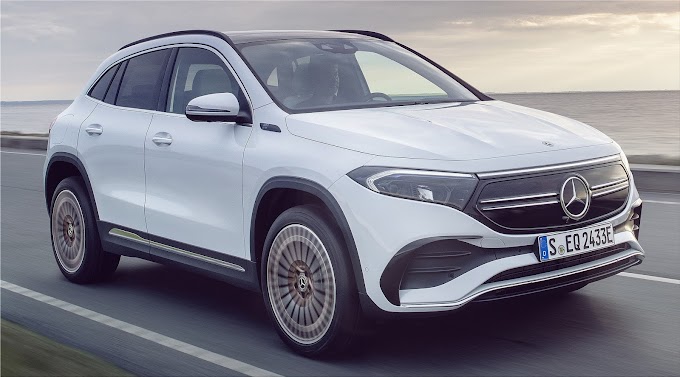
Toyota's second-generation C-HR abandons its gasoline-only past and moves to a dedicated battery-electric platform. The 2027 model uses a shortened e-TNGA architecture, a 71.4-kWh lithium-ion pack, and two motor configurations that produce up to 320 horsepower. Every version ships with Toyota Safety Sense 3.0, a 12.3-inch touchscreen, and over-the-air update capability. The front-drive XLE returns an estimated 303 miles of EPA range, while the dual-motor Limited clips 274 miles and sprints to 60 mph in 5.8 seconds.

The engineering team prioritized rigidity, mass reduction, and steering precision. A longer wheelbase and reconfigured front axle placement free up rear knee room without stretching overall length beyond 171.5 inches. The result is a compact electric crossover that feels more substantial than a Hyundai Kona Electric and charges faster than a Kia Niro EV.
A Dedicated EV Platform Changes the Proportions
The 2027 Toyota C-HR electric rides on the e-TNGA bones shared with the bZ4X, but the wheelbase grows to 106.3 inches—2.3 inches longer than the previous gasoline model’s axle-to-axle distance. Pushing the front axle forward allowed engineers to mount the drive unit ahead of the passenger cell. Rear-seat knee clearance expands by 1.8 inches, and the floor stays completely flat. Curb weight starts at 3,748 pounds for the front-drive XLE and reaches 4,023 pounds for the all-wheel-drive Limited.
Suspension hardware includes MacPherson struts up front and a multilink arrangement at the rear. Replacing the old torsion beam was necessary to accommodate the underfloor battery. Spring rates sit 8 percent higher in front and 12 percent higher in back than those on the bZ4X, which reduces body roll during cornering. Ground clearance measures 6.9 inches, a value that keeps the center of gravity low and helps the body slice through air with a 0.28 drag coefficient.
Bold key terms: 2027 Toyota C-HR electric, e-TNGA platform, compact electric SUV, 71.4-kWh battery, 303-mile range, dual-motor AWD, 0-60 mph 5.8 seconds, Toyota Safety Sense 3.0, 150 kW DC fast charging, X-Mode AWD.
Battery Tech, Charging Speed, and Cold-Weather Behavior
Toyota worked with Prime Planet Energy & Solutions to produce a lithium-ion pack containing a nickel-manganese-cobalt cathode with only 5 percent cobalt. Gross capacity comes to 71.4 kWh, and 68.8 kWh are usable. The pack runs at a nominal 355 volts. Liquid cooling circulates a glycol-water mixture through a flat heat exchanger underneath the modules.
When plugged into a 350-kW DC fast charger at 77 degrees Fahrenheit, the battery can accept 150 kW from 10 percent state of charge up to 48 percent before gradually reducing the rate to 80 kW by 70 percent. The 10-to-80-percent charge takes 32 minutes on the front-drive car and 34 minutes on the dual-motor variant. On an 11-kW Level 2 home charger, a full top-up requires 6.5 hours. A 7-kW resistive heater integrated into the coolant circuit warms the battery to 50 degrees Fahrenheit in 12 minutes while connected to a DC fast charger, which preserves cold-weather charging performance. Range drops about 19 percent at below-zero Fahrenheit temperatures when the heat-pump climate system operates.
Battery and Charging Figures
| Specification | XLE (FWD) | Limited (AWD) |
|---|---|---|
| Gross battery capacity | 71.4 kWh | 71.4 kWh |
| Usable capacity | 68.8 kWh | 68.8 kWh |
| EPA estimated range | 303 miles | 274 miles |
| Peak DC fast-charge power | 150 kW | 150 kW |
| Onboard AC charger | 11 kW | 11 kW |
| 10–80% DC charge time | 32 minutes | 34 minutes |
| Heat pump | Standard | Standard |
Motor Output, AWD Logic, and Acceleration Numbers
The XLE employs a single permanent-magnet motor that delivers 215 horsepower and 210 lb-ft of torque to the front axle. Zero to 60 mph happens in 6.8 seconds. The Limited adds an asynchronous induction motor on the rear axle good for 105 horsepower and 124 lb-ft. Combined output reaches 320 horsepower and 334 lb-ft, chopping the 0-to-60-mph sprint to 5.8 seconds. That puts the dual-motor 2027 Toyota C-HR half a second ahead of a Kia Niro EV Wave and three-tenths quicker than a Volkswagen ID.4 Pro S AWD.
Toyota’s X-Mode all-wheel-drive system splits torque using yaw rate, steering angle, and wheel-slip data. Sport mode sends as much as 60 percent of available torque to the rear axle. Snow mode locks the torque split at 50:50 below 12 mph. Trail mode can brake a slipping wheel individually to replicate a limited-slip differential. Three levels of regenerative braking adjust via steering-wheel paddles, and one-pedal driving can bring the vehicle to a complete stop and hold it on grades up to 8 percent. Braking hardware consists of 12.6-inch vented front rotors and 11.1-inch solid rear rotors with single-piston sliding calipers.
Interior Layout, Cargo Measurements, and Multimedia
Designers dropped the beltline by 1.4 inches to improve visibility. The dashboard takes on a driver-focused wing shape wrapped in soft polyurethane and optional Dinamica suede containing 30 percent recycled polyester. A 12.3-inch digital gauge cluster sits behind a squared-off steering wheel. The standard 12.3-inch Toyota Audio Multimedia touchscreen runs on an ARM processor and pairs wirelessly with Apple CarPlay and Android Auto. Over-the-air software updates will enable battery-preconditioning route planning in early 2026.
Behind the second row, cargo volume totals 23.1 cubic feet. Folding the 60/40-split rear seatbacks opens up 54.9 cubic feet. The front-drive model offers a 1.8-cubic-foot frunk; the dual-motor version deletes it to house the front inverter and cooling hardware.
Pro-Tip: If you regularly carry three passengers and their luggage, specify the XLE with the Weather package. The included roof rails support a 165-pound cargo box and free up interior space for outboard rear-seat passengers.
Standard and Available Interior Features
- 12.3-inch Toyota Audio Multimedia display with cloud navigation
- Wireless Apple CarPlay, Android Auto, and a 15W Qi wireless charger
- 9-speaker JBL Premium Audio with 8-inch subwoofer (Limited)
- Heated and ventilated front seats (Limited); 8-way power driver seat
- Cloth and SofTex upholstery throughout the lineup
- Over-the-air update capability for infotainment and powertrain modules
Safety Technology: Toyota Safety Sense 3.0 Standard
Every 2027 C-HR includes the Toyota Safety Sense 3.0 suite. The system combines a forward-facing millimeter-wave radar and a monocular camera to enable features such as Pre-Collision System with pedestrian detection at up to 50 mph and motorcyclist detection at up to 43 mph. Lane Tracing Assist uses an expanded camera field of view to follow lane markings smoothly through bends. Proactive Driving Assist automatically reduces speed when the driver lifts off the accelerator and a vehicle ahead is detected.
Safe Exit Assist alerts occupants if a bicycle or vehicle approaches when a door is opened. Blind Spot Monitor with Rear Cross-Traffic Braking and Automatic High Beams are standard. The Limited adds a Panoramic View Monitor that creates a 360-degree top-down view and a digital rearview mirror that bypasses cargo-blocked sightlines.
Toyota Safety Sense 3.0 Core Functions
- Pre-Collision System with Pedestrian, Cyclist, and Motorcyclist Detection
- Full-Speed Adaptive Cruise Control with Stop-and-Go
- Lane Departure Alert with Steering Assist
- Lane Tracing Assist
- Road Sign Assist
- Automatic High Beams
- Proactive Driving Assist
Trim Walk and Pricing
Two trims structure the lineup. The XLE starts at $34,950 including the $1,335 destination charge. It includes 18-inch aero-faced alloy wheels, dual-zone automatic climate control, heated front seats, and the full Safety Sense 3.0 bundle. The Limited, priced at $42,250, adds the dual-motor all-wheel-drive system, 19-inch wheels, ventilated front seats, the JBL audio system, and the Panoramic View Monitor.
A national lease program aims for $339 per month for 36 months with $3,999 due at signing on the XLE. The Limited’s lease rates land about $80 higher per month. Both trims qualify for available federal and state incentives that can reduce the effective transaction price further.
How the C-HR Measures Up Against Key Rivals
The 2027 Toyota C-HR enters a crowded group of compact electric crossovers. Below, it faces the Chevrolet Bolt EUV and Hyundai Kona Electric; above it, the Volkswagen ID.4 and Ford Mustang Mach-E. The Toyota’s dual-motor acceleration outruns the Korean competition and its 150-kW charging speed handily beats the Kona Electric’s 100-kW peak and the Niro EV’s 85-kW limit.
| Key Spec | 2027 C-HR Limited AWD | 2026 Kia Niro EV Wave | 2026 Hyundai Kona Electric Limited | 2026 VW ID.4 Pro S AWD |
|---|---|---|---|---|
| Combined horsepower | 320 hp | 201 hp | 201 hp | 295 hp |
| Torque | 334 lb-ft | 188 lb-ft | 188 lb-ft | 339 lb-ft |
| EPA range (AWD) | 274 miles | 253 miles | 260 miles | 263 miles |
| Max DC charge rate | 150 kW | 85 kW | 100 kW | 175 kW |
| 10–80% charge | 34 minutes | 45 minutes | 43 minutes | 30 minutes |
| Base price (AWD) | $42,250 | $44,600 | $41,050 | $47,290 |
| Cargo volume (rear seats up) | 23.1 cu ft | 22.8 cu ft | 25.5 cu ft | 30.3 cu ft |
From an expert perspective, the C-HR delivers stronger acceleration and faster charging than the Kia and Hyundai while undercutting the Volkswagen on price by a margin of over $5,000. The VW ID.4 offers more cargo room and a slightly quicker charge session, but the Toyota’s balance of performance, range, and affordability makes it a compelling package. Specifically, the XLE front-wheel-drive trim’s 303-mile range at $34,950 stands as the value leader in this set, beating the Kona Electric’s 261-mile rating at a similar price.